
We are a Norwegian public listed, open-ended and fully integrated investment company. We are owners, developers and managers of commercial real estate in the Baltics.
Our model
We provide our clients long-term partnership and our shareholders total returns.
 Scroll down

Vision
To be the preferred real estate partner and leading investment company in the region.
Mission
Through developing and fostering a great team and providing high quality and sustainable solutions for our partners, we create superior long-term value and returns for our shareholders.
Portfolio
We are primarily focused on expanding our superior cash flow generating portfolio of modern logistics, industrial and commercial real estate. We are a committed long-term owner of the projects we develop and the partners we serve. We also acquire and hold a portfolio of strategically located land plots readily available for new clients.
Platform
Baltic Sea Properties (BALT) is listed on Euronext Growth Oslo, a multilateral trading facility (MTF) part of Oslo Stock Exchange.
Through Euronext, our company has access to the largest liquidity pool of international capital in Europe, powered by a single order book on the Optiq® platform.
Through Euronext, our company has access to the largest liquidity pool of international capital in Europe, powered by a single order book on the Optiq® platform.
Our values
Commitment
Commitment to our people and their professional development.
Value
Focus on innovation and value creation.
Respect
Respect for our social and physical environment.
Accountability
Accountability and fairness with our stakeholders.
Integrity
Reliability and integrity in all we do.
Responsibility
Guided by our values, we take a holistic approach to sustainable investing, including environmental, social and governance (ESG) principles.
We are careful to focus on positive investments and with partners who share similar values. By having a lifecycle approach in our real estate development — committing to modern technologies, respecting the environment and the creation of quality spaces for people— we build a portfolio that will remain functional, relevant and attractive for decades. By being fair and transparent with all our stakeholders, we build strong relationships with mutually beneficial opportunities.
Environmental
We are committed to our transition to renewable energy and to significantly reduce our carbon footprint. We plan to maximise our solar energy production capacities in all our buildings and are looking forward to implementing other off-grid and environmentally friendly initiatives.
All new developments in Baltic Sea Properties are compliant with BREEAM In-Use “Very Good” as a minimum.
In our new projects, sustainability is at the fore during; site selection, building & landscaping design, construction and subsequent operations. With the advantage of being a long-term owner; we consider the life cycle of the buildings and parks and promote flexibility during design and promote recycling and energy efficiency both in the construction/reconstruction process and together with our clients.
Click here to read more about our sustainability initiatives.
Social
Baltic Sea Properties is an equal-opportunity employer and pledge to not discriminate against any employee or job applicant because of age, sexual orientation, gender identity, ethnicity, culture, health, disability, or religion. We see diversity as a strength and are committed to ensure that Baltic Sea Property is an inclusive workplace for all.
As employer, we also acknowledge the importance of factors such as safe working environment, respectful communication, a good work-life balance, and a person’s need for a sense of purpose and personal growth. Our employees have several benefits to help their well-being and personal growth, including:
- Safety at work education & training
- Flexible working hours and remote working opportunities.
- Flexible holiday scheduling.
- Share-ownership through the company’s share bonus program.
- Access to funds for continued education and training.
- Access to sports and training facilities.
- Regular team-building events and social gatherings.
When selecting contractors and clients, we carefully consider safety at work and employee welfare policy and records of our partners.
We are also very conscious of our role in society and the local communities where are projects are located. We have a strong focus on respecting people and like to include multiple amenities, sports facilities and services in our projects.
In Baltic Sea Properties we allocate funds and volunteer our time for social support initiatives. Support of local children’s education, health and well-being is one such initiative, whereby each year we organise the Klaipėda Business Park Charity Cup to raise funds for local charity organisations. Please feel free to contact us with and co-operation ideas for social support projects (post@balticsea.no).
Governance
Baltic Sea Properties is subject to strict rules and oversight as a Norwegian publicly listed company (BALT) on Euronext Growth Oslo (MTF under Oslo Stock Exchange). We are compliant with the EU Market Abuse Regulation (MAR) and have our own comprehensive insider trading policy.
We adhere to the Norwegian Code of practice for Corporate Governance (NCCG). Our leaders have completed professional corporate governance education in Norway and at the Baltic Institute of Corporate Governance (BICG).
The board of directors of Baltic Sea Properties are proposed by the election committee for a period of 2-3 years and are appointed by the shareholders at the annual general meeting (AGM). Due consideration is given to collective board competence, independence, diversity and performance.
All shares in Baltic Sea Properties have equal voting rights, and all shareholders have equal rights to attend the AGM and other shareholder meetings. Regular reports and news updates are provided on our website, Oslo Stock Exchange’s messaging service, and Euronext Live.
We have a zero-tolerance policy towards corruption and are a strong supporter of the “open book” principle of co-operation and general transparency in business.
Transparency Act statement
Reporting year 2025
First published: 29 June 2026, 15:38 CEST
Last update: 29 June 2026, 15:38 CEST
Due diligence assessments for sustainable business practices
| Established | 2005 |
| Address | Tollbugata 8A, 0152 Oslo, Norway |
| NACE-Industry | 64.202 |
| Employees | 17 |
| Revenue | 107.5 million NOK |
| Contact | Espen Aas, Financial Controller & Investor Relations (+47 930 65 823) |
Table of Contents
1) About us
1.1) Ethical guidelines and procedures
2) Method for due-diligence assessments
2.1) Internal assessments and board endorsement
2.2) Supplier survey
3) Findings from due-diligence assessment
3.1) Discovered actual negative consequences for fundamental human rights or decent working conditions
3.2) Discovered potential negative consequences for fundamental human rights or decent working conditions
4) Measures
4.1) Update on implementation
4.2) Results from measures
4.3) Ongoing measures
4.4) Planned measures
5) Contact
6) Signatories
1) About us
Baltic Sea Properties is a Norwegian public listed, open-ended and fully integrated investment company. The company is among the Baltics’ leading real estate investors and developers – owning a diversified cash flow generating portfolio of modern real estate in the logistics, industrial and commercial segments.
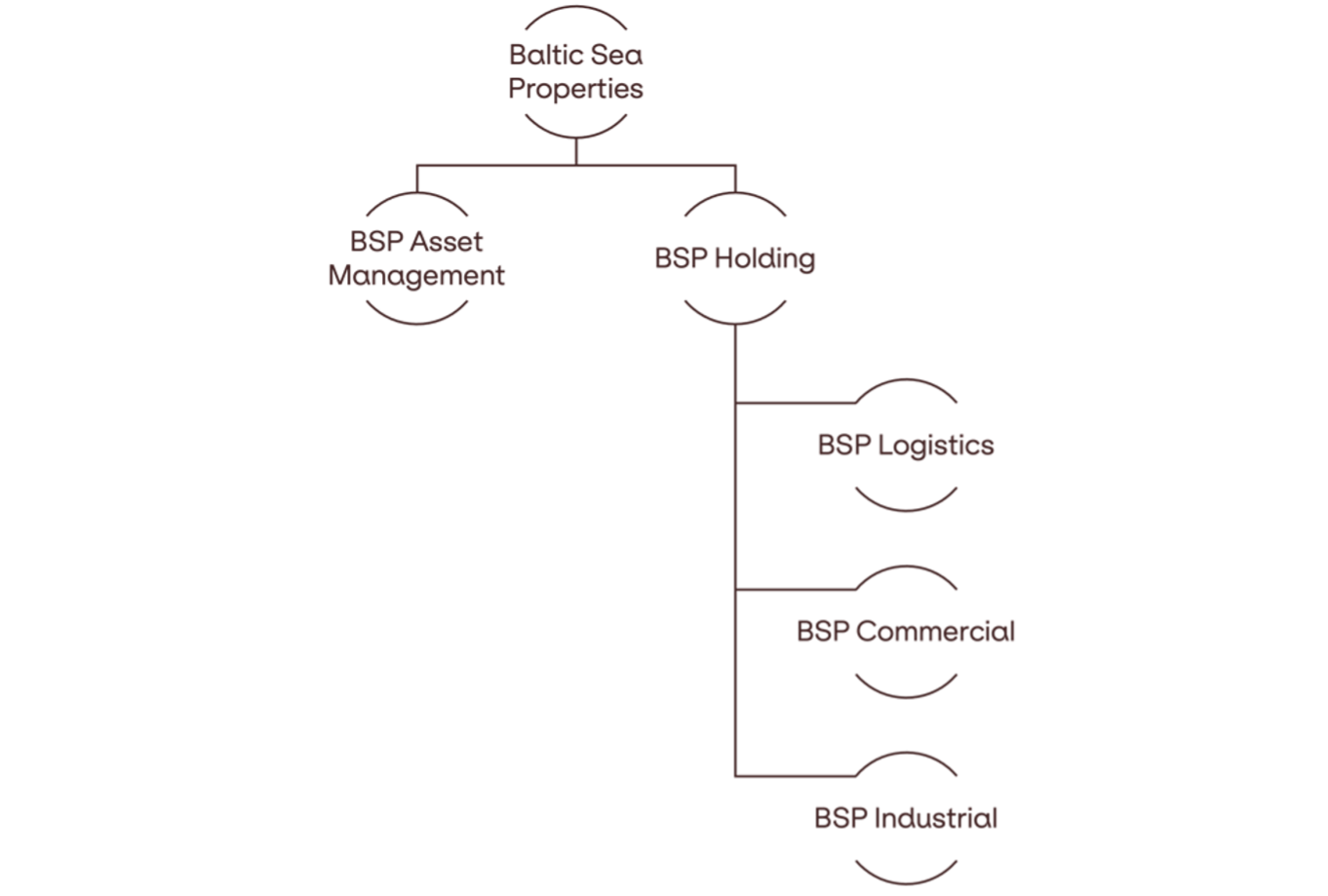
Our strategy is to develop long-term relationships with strong clients and to hold high-quality assets in attractive locations. We grow our portfolio by own developments and acquisitions with the objective to maximize shareholder values and the company’s dividend capacity. The property management is conducted through fully-owned subsidiaries by a professional management team with deep knowledge of the Baltic real estate market.
1.1) Ethical guidelines and procedures
Responsible business conduct involves systematic efforts by companies to identify, prevent, mitigate, and report on how businesses address the risk of negative impacts on people, society, and the environment. We therefore welcome the Transparency Act as it will drive further measures linked to human rights and decent working conditions.
Baltic Sea Properties is subject to strict rules and oversight as a Norwegian publicly listed company (BALT) on Euronext Growth Oslo (MTF under Oslo Stock Exchange). We are compliant with the EU Market Abuse Regulation (MAR) and have our own comprehensive insider trading policy. We adhere to the Norwegian Code of practice for Corporate Governance (NCCG).
We have a zero-tolerance policy towards corruption and are a strong supporter of the “open book” principle of co-operation and general transparency in business. We consider ourselves to be a socially responsible company.
During 2025 the Board of Directors adopted a refreshed policy framework, documenting and strengthening the principles that guide our own operations as well as the expectations we set for our suppliers:
Internal Code of Conduct: Governs how every employee and director of BSP Group shall act – covering compliance with laws, human rights and labour standards, health and safety, environmental responsibility, anti-corruption, conflicts of interest, data protection, misconduct prevention, use of company resources, and guidance on gifts and hospitality.
Supplier Code of Conduct: Sets out the minimum ethical, social and environmental standards that every supplier engaged by BSP Group must meet, including responsible sourcing, anti-corruption, human rights and explicit Transparency Act obligations.
Whistleblowing Policy: Is available to employees and all external stakeholders, including suppliers and their personnel. It establishes a designated Whistleblowing Officer, defined acknowledgment and assessment timelines, an external legal contact for fully confidential reporting, and explicit safeguards against retaliation.
All three policies were adopted by the Board of Directors with date of issue 30 June 2025 and countersigned by the CEO and the Board Member holding the responsibility on 15 September 2025.
2) Method for due-diligence assessments
2.1) Internal assessments and board endorsement
Baltic Sea Properties AS is committed to upholding the principles of transparency and accountability as outlined in the Transparency Act. Our adherence to this legislation involves a rigorous process of due diligence assessments aimed at ensuring the protection of fundamental human rights and the promotion of decent working conditions throughout our operations. Our approach to complying with the Transparency Act begins with comprehensive internal evaluations to identify and prioritize potential risks associated with violations of human rights and working conditions. These assessments are conducted with a focus on both the severity and likelihood of such risks.
As our primary operations are centred in the Baltics, particularly in Lithuania, we concentrate our due diligence efforts on this region. Recognizing the heightened risk factors identified by the International Trade Union Confederation (ITUC), we prioritize our assessments accordingly. To effectively manage these assessments, we categorize our suppliers resulting in the following priority:
| Supplier Category | Priority |
| Construction | 1 |
| Property services | 2 |
| Designers | 3 |
| Financial institution | 4 |
| Consulting services | 5 |
In line with our commitment to transparency and accountability, we focus our attention on suppliers categorized with higher risk levels, namely construction, property services, and designers. Selected suppliers within each category undergo thorough surveys and ongoing follow-up to ensure compliance with our standards and regulations.
To facilitate this process, our two regional managing directors have been appointed to engage our selected suppliers. Their role is to guide suppliers through the survey process, aiding as needed, and nurturing strong relationships with our partners. We view this close dialogue with our suppliers as a strategic advantage, enabling us to address potential issues proactively and maintain high standards of ethical conduct throughout our supply chain.
The work on the Transparency Act is rooted in the Board of Directors. The formal adoption of its principles was done in a board meeting on the 10th of April 2024, and reconfirmed in connection with this year’s reporting cycle. Responsibility for the implementation and follow-up of the guidelines remains with Espen Aas, Financial Controller & Investor Relations.
2.2) Supplier survey
For the supplier survey we used Factlines to maintain up-to-date information regarding our suppliers’ conditions. The 2025 survey was sent to 9 suppliers and achieved a response rate of 100 %, up from 88 % in 2024 and 78 % in 2023. This delivers on the commitment made in our 2024 statement to reach full participation, and reflects both the formalisation of the survey obligation in our amended supplier agreement and the close one-on-one dialogue our managing directors maintain with each supplier.
The survey includes inquiries related to fundamental human rights and decent working conditions, in line with OECD guidelines. The self-reporting questionnaire covers various critical aspects:
- Corporate responsibility, strategy, and guidelines
- Supply chain oversight, insight, and control
- Risk assessment and due diligence processes
- Evaluation of country-specific risks
- Management systems
- Conditions and rights within the workforce
- Indigenous peoples’ concerns and environmental impact
- Conflict mineral sourcing
- Anti-corruption measures
The data collection provides a basis for assessing risk in the supply chain by using updated information from our suppliers, and the survey forms the basis for further follow-up. If self-reporting or other indicators signal significant deviations, these are followed up with the respective suppliers. The purpose is to prevent and reduce negative consequences in collaboration with the supplier.
Our 2025 review went deeper than previous cycles. In addition to tracking the headline Yes / No / Don’t know counts, we examined supplier free-text comments, distinguished between formal policy and actual practice, considered supplier size and sector context, and assessed whether the survey question fit the supplier’s business model. The goal is to build a picture of actual due-diligence practice rather than rely on aggregate scoring alone — and to keep our follow-up requests proportionate to supplier scale, in line with the OECD Due Diligence Guidance that the Norwegian Transparency Act (“Åpenhetsloven”) references.
3) Findings from due-diligence assessment
The assessment conducted by the International Trade Union Confederation (ITUC) provides valuable insights into the protection of labour rights across different countries. In the case of Lithuania, its score of 2 from ITUC indicates repeated violations of collective labour rights. Although workers generally enjoy the freedom to associate and participate in collective bargaining to enhance their working conditions, they also face recurrent challenges. These challenges often arise from governmental or corporate actions that hinder workers’ ability to fully exercise their rights. As a result, the risk of encountering obstacles related to labour rights protection is slightly elevated in Lithuania compared to countries with a better score, such as Norway. While the disparity between the scores is not substantial, it underscores the importance of considering potential risks associated with labour rights when operating in these countries. It is worth noting that Europe as a region has seen labour-rights conditions deteriorate fast over the past decade — the regional average rating has fallen from 1.84 in 2014 to 2.78 in 2025, and the most recent reading is 2.80 in 2026, a new Index low — so the country-specific risk picture should be read in that broader context. (ITUC, Global Rights Index 2025 and 2026.)
Reading this country-level risk picture against our supplier-level answers, the picture is internally consistent. On the questions most directly affected by the ITUC tier-2 concern — whether employees are allowed to join and form free unions, and whether collective bargaining is allowed — eight of nine suppliers confirm the former and seven of nine confirm the latter. The remaining responses are “Don’t know” rather than “No”, and where comments accompany those answers they describe the question as untested rather than denied.
These initial factors are not exclusive to the Baltics, but we believe that by identifying these initial risk factors, Baltic Sea Properties can develop targeted strategies to promote human rights and decent working conditions across its operations in the region.
3.1) Discovered actual negative consequences for fundamental human rights or decent working conditions
No actual negative consequences for fundamental human rights or decent working conditions were uncovered through our due-diligence assessment. Specifically, across the three event-questions — supplier breaches discovered in the past 12 months, accusations or convictions of bribery or fraud against any owner, partner, director, officer or employee in the past five years, and tax-related prosecutions in any country of operation in the past five years — all nine surveyed suppliers answered “No” to all three. That is 27 of 27 event-question answers clean across the portfolio.
Beyond these event findings, the survey’s fundamental-rights block — ten questions covering local labour-law compliance, anti-discrimination, child-labour zero tolerance, forced-labour policy, freedom of association, collective bargaining, working hours under 48 per week, minimum-wage compliance, overtime pay, and personal protective equipment — returned 85 of 90 valid answers as “Yes”. There were no “No” answers anywhere in this block. The five non-Yes answers comprise three candid “Don’t know” responses and two blanks on personal protective equipment which we have flagged for follow-up in the 2026 cycle.
3.2) Discovered potential negative consequences for fundamental human rights or decent working conditions
From our supplier survey, we continue to identify certain potential issues among our suppliers. We prioritize potential risks related to human rights as most severe. The questionnaire is divided so that respondents can answer “Yes,” “No,” and “Don’t know” to specific questions. For example, we assess the potential risk higher where a supplier has answered “No” to having ethical guidelines, compared to when a supplier has answered “Don’t know” to the same question. The findings are grouped into 3 themes.
Human rights and labour rights: The 2025 results show broadly stable answers compared with 2024 on conflict minerals, bribery and corruption. Across the 9 respondents, one supplier confirmed the inclusion of a conflict minerals prohibition clause in its contracts, two reported that no such clause is in place, one indicated uncertainty, and five stated that the issue is not relevant to their operations. Two suppliers provided specific free-text disclosures of materials within the conflict-minerals scope: one supplier (which reported “No” to the clause question) noted that tin is used in electric components, and one supplier (which had confirmed a contractual prohibition clause) listed tin and tungsten. Both cases are followed up in Section 4.3. Six suppliers confirmed they have an anti-bribery and corruption policy (up from five in 2024), while two continue to report that they do not have such a policy and one remains unsure.
Whistleblowing channel and policies: Seven suppliers now confirm whistleblowing procedures in relation to harassment, corruption and other illegal activities (up from six in 2024), while two report no such channel. On ethical guidelines aligned with the UN Global Compact and ILO conventions, six suppliers confirm adoption, two report no such guidelines, and one answered “Don’t know”. This mix indicates continued progress but a persistent gap with a small number of suppliers.
Compliance systems: Eight of nine suppliers report having a Health & Safety system in place. The remaining supplier has been identified for direct follow-up in the Construction category; the absence of a formal Health & Safety framework is one of the specific items addressed in our planned measures (see Section 4.4). Four suppliers confirm supply chain follow-up systems and routines, while three report not having such systems and two answered “Don’t know” – an area where we have not yet seen the improvement we expected, and which informs our planned measures in Section 4.4.
Overall, our suppliers’ aggregate score improved from an average of 70 in 2023 and 75 in 2024 to 76 in 2025, and the share of “Yes” answers rose modestly year over year. These findings reinforce the importance of our commitment to addressing remaining gaps and collaborating closely with our suppliers to encourage improved ethical practices across our supply chain. Although a lot of important work has been done to formalize requirements for ourselves and our suppliers, the next step is to ensure that these requirements translate into documented practices at each supplier. Please refer to Sections 4.3 and 4.4 for further detail in this regard.
4) Measures
4.1) Update on implementation and ongoing measures
In our 2024 Transparency Act statement (published June 2025) we committed to a number of concrete actions. These are listed below together with an update on what we have done for improvement over the last twelve months:
- Last year’s statement: “We will require all suppliers to sign our new standard supplier agreement by 31 December 2025 (or implement equivalent wording related to transparency, ethical standards, sanctions and information sharing in their existing agreements).”
Update:
A formal amendment to the supplier agreement was distributed to all active suppliers, accompanied by the Board-approved Supplier Code of Conduct. The amendment introduces contractually binding obligations relating to completion of the annual Transparency Act survey, adherence to the Supplier Code of Conduct, collaboration on continuous improvement, and compliance with international sanctions. - Last year’s statement: “We will actively enforce the suppliers’ duty to respond to the next Transparency Act survey with reference to their obligations under our amended supplier agreement. In effect, we expect to see 100 % response rate in next year’s survey.”
Update:
9 of 9 invited suppliers responded to the 2025 survey, delivering a 100 % response rate (up from 88 % in 2024 and 78 % in 2023). - Last year’s statement: “We will require that by 31 March 2026, all suppliers document (i) prohibition against the use of conflict minerals in their supplier agreements, (ii) a written policy prohibiting bribery and corruption, and (iii) a written whistleblowing policy/procedures.”
Update:
Partially met. In the survey, six of nine suppliers reported to have an anti-bribery and corruption policy in place (up from five), and seven had whistleblowing procedures (up from six). One supplier confirmed a conflict minerals prohibition clause in its contracts, five consider the issue not relevant to their operations, and three responses remained either “No” or “Don’t know”. Where requirements remain outstanding, we will initiate direct follow-up with each supplier (see Section 4.3). - Last year’s statement: “To ease the implementation, BSP will offer document templates and practical/legal advice to the suppliers upon request to ensure a swift and smooth adoption of required policies and practices to comply with our supplier Code of Conduct.”
Update:
Two ready-to-use templates — an Ethical Commitment Statement (covering human rights, anti-bribery and conflict minerals) and a Simple Whistleblowing Procedure — were prepared in both English and Lithuanian and distributed to all active suppliers alongside the survey invitation. The templates are deliberately proportionate to the scale of our supplier portfolio and are intended to make it as straightforward as possible for suppliers to document their ethical commitments and whistleblowing arrangements. The amendment itself emphasises that BSP Group remains available to support suppliers with templates, practical guidance and clarification of requirements.
In parallel, and as a prerequisite for credibly requiring these standards of our suppliers, BSP Group itself strengthened its own governance during 2025. The Board of Directors adopted a refreshed Internal Code of Conduct, Supplier Code of Conduct and Whistleblowing Policy during the summer of 2025. The Whistleblowing Policy in particular has been significantly expanded: it now defines a dedicated Whistleblowing Officer role appointed through an employee vote, sets explicit acknowledgment (5 business days) and preliminary assessment (10 business days) timelines, describes resource allocation guidelines for investigations, and provides the Whistleblowing Officer with a direct path to the Board of Directors where escalation is warranted. Employees and external stakeholders can report concerns either directly to BSP Group or to an independent external legal contact for fully confidential reporting.
4.2) Results from implemented measures
Following from the implemented measures, the following notable improvements have been observed:
- The response rate improved from 88 % in 2024 to 100 % in 2025 (and from 78 % in 2023), meeting the explicit commitment made in last year’s statement.
- One more supplier than last year confirmed having an anti-bribery and corruption policy in place (six vs. five).
- One more supplier than last year confirmed having whistleblowing procedures in place (seven vs. six).
- One more supplier than last year reports having a Health & Safety Management system in place (eight vs. seven).
- The average supplier self-assessment score rose from 75 in 2024 to 76 in 2025, continuing the improvement trend from 70 in 2023.
4.3) Ongoing measures
Two suppliers provided specific free-text disclosures relating to materials that can fall within the conflict-minerals scope. The first, which had reported that its contracts do not include a conflict-minerals prohibition clause, noted that tin is used in electric components it installs. The second, which had separately confirmed a contractual prohibition clause, nevertheless listed “tin, tungsten” in the free-text follow-up — we will follow up for clarification.
It is important to note in this regard that minerals such as tin and tungsten are not inherently conflict minerals, and that their classification as such depends specifically on geographic origin and extraction context. We will therefore ask both suppliers to identify the country of origin of the refining step. Where the country of origin is not on the Responsible Minerals Initiative conflict-affected list (the Democratic Republic of Congo and adjoining countries), we will document the response and close the question. We will only request more detailed refiner-level documentation where the country of origin is conflict-affected or cannot be identified. Should our investigation unexpectedly uncover unethical practices, we will implement necessary corrective actions, and we retain the option to terminate supplier contracts where required.
That being said, at present, we have no reason to suspect unethical practices in these particular cases.
In parallel, we are conducting targeted follow-up with the three suppliers that still report not having – or being uncertain about – a written anti-bribery and corruption policy, and with the two suppliers that still report not having whistleblowing procedures. We have shared our templates and offered practical assistance. Where a supplier’s operations genuinely make a particular requirement disproportionate (for example, very small service-only vendors), we document the rationale and seek equivalent safeguards rather than a pro-forma policy.
4.4) Planned measures
With three reporting cycles now completed, we are moving from formalisation towards verified implementation. Over the next 12 months we will focus on the following concrete actions, with a 2026 target of lifting the average supplier self-assessment score above 80 (up from 76 in 2025) — a stretch target that requires every per-supplier fix in this measures section to land at the optimistic end of its projected movement:
- Close out the remaining 31 March 2026 commitments by obtaining, from every active supplier, documented (i) conflict minerals prohibition (or a documented “not relevant” rationale where appropriate), (ii) anti-bribery and corruption policy, and (iii) whistleblowing policy/procedures.
Single-item fixes are targeted for close by 31 October 2026, and multi-item rebuilds by 28 February 2027 — before the 2026 Factlines cycle opens in March 2027 and provides the verification feed for the next reporting cycle.
- Reduce the share of “Don’t know” answers, which moved the wrong way from 8.5 % in 2024 to 9.5 % in 2025. Our 2026 target is to bring the share below 7 %.
- Strengthen supply chain follow-up at the supplier level. Our 2025 review found a clear pattern: while internal ethics maturity is high — most suppliers have ethical guidelines in place, distribute them to employees, and confirm they are enforced internally — only two of nine have shared those guidelines with their own suppliers and only two of nine have asked their own suppliers to complete a self-assessment in the past year. This cascade between first-tier compliance and second-tier follow-up mirrors exactly where BSP itself was two reporting cycles ago, and we read it as a normal next maturity step in the programme rather than a deficiency.
- Continue to expand coverage by inviting additional relevant suppliers into the due-diligence assessment as our portfolio evolves.
- Further formalisation of construction-supplier Health & Safety oversight is under active review during 2026. Outcomes will be reported in our 2026 Transparency Act statement.
We remain committed to driving real, documented change rather than pro-forma compliance, and we will continue to leverage our commercial relationships constructively – while retaining the option to terminate contracts where practices do not align with our requirements.
5) Contact
Inquires related to the Transparency Act may be directed to transparency@balticsea.no.
6) Signatories
- Lars Christian Berger — CEO
- James Andrew Clarke — Chairman of the Board
- Henrik Austgulen — Board Member
- John David Mosvold — Board Member
Reporting year 2024
First published: 27 June 2025, 11:10 CEST
Last update: 27 June 2025, 11:10 CEST
Due diligence assessments for sustainable business practices
| Established | 2005 |
| Address | Tollbugata 8A, 0152 Oslo, Norway |
| NACE-Industry | 64.202 |
| Employees | 17 |
| Revenue | 97.2 million NOK |
| Contact | Espen Aas, Financial Controller & Investor Relations (+47 930 65 823) |
Table of Contents
1) About us
1.1) Ethical guidelines and procedures
2) Method for due-diligence assessments
2.1) Internal assessments and board endorsement
2.2) Supplier survey
3) Findings from due-diligence assessment
3.1) Discovered actual negative consequences for fundamental human rights or decent working conditions
3.2) Discovered potential negative consequences for fundamental human rights or decent working conditions
4) Measures
4.1) Update on implementation
4.2) Results from measures
4.3) Ongoing measures
4.4) Planned measures
5) Contact
6) Signatories
1) About us
Baltic Sea Properties is a Norwegian public listed, open-ended and fully integrated investment company. The company is among the Baltics’ leading real estate investors and developers – owning a diversified cash flow generating portfolio of modern real estate in the logistics, industrial and commercial segments.
Our strategy is to develop long-term relationships with strong clients and to hold high-quality assets in attractive locations. We grow our portfolio by own developments and acquisitions with the objective to maximize shareholder values and the company’s dividend capacity. The property management is conducted through fully-owned subsidiaries by a professional management team with deep knowledge of the Baltic real estate market.
1.1) Ethical guidelines and procedures
Responsible business conduct involves systematic efforts by companies to identify, prevent, mitigate, and report on how businesses address the risk of negative impacts on people, society, and the environment. We therefore welcome the Transparency Act as it will drive further measures linked to human rights and decent working conditions.
Baltic Sea Properties is subject to strict rules and oversight as a Norwegian publicly listed company (BALT) on Euronext Growth Oslo (MTF under Oslo Stock Exchange). We are compliant with the EU Market Abuse Regulation (MAR) and have our own comprehensive insider trading policy. We adhere to the Norwegian Code of practice for Corporate Governance (NCCG). Our leaders have completed professional corporate governance education in Norway and at the Baltic Institute of Corporate Governance (BICG).
We have a zero-tolerance policy towards corruption and are a strong supporter of the “open book” principle of co-operation and general transparency in business. We consider ourselves to be a socially responsible company.
2) Method for due-diligence assessments
2.1) Internal assessments and board endorsement
Baltic Sea Properties AS is committed to upholding the principles of transparency and accountability as outlined in the Transparency Act. Our adherence to this legislation involves a rigorous process of due diligence assessments aimed at ensuring the protection of fundamental human rights and the promotion of decent working conditions throughout our operations. Our approach to complying with the Transparency Act begins with comprehensive internal evaluations to identify and prioritize potential risks associated with violations of human rights and working conditions. These assessments are conducted with a focus on both the severity and likelihood of such risks.
As our primary operations are centred in the Baltics, particularly in Lithuania, we concentrate our due diligence efforts on this region. Recognizing the heightened risk factors identified by the International Trade Union Confederation (ITUC), we prioritize our assessments accordingly. To effectively manage these assessments, we categorize our suppliers resulting in the following priority:
| Supplier Category | Priority |
| Construction | 1 |
| Property services | 2 |
| Designers | 3 |
| Financial institution | 4 |
| Consulting services | 5 |
In line with our commitment to transparency and accountability, we focus our attention on suppliers categorized with higher risk levels, namely construction, property services, and designers. Selected suppliers within each category undergo thorough surveys and ongoing follow-up to ensure compliance with our standards and regulations.
To facilitate this process, our two regional managing directors have been appointed to engage our selected suppliers. Their role was to guide suppliers through the survey process, aiding as needed, and nurturing strong relationships with our partners. We view this close dialogue with our suppliers as a strategic advantage, enabling us to address potential issues proactively and maintain high standards of ethical conduct throughout our supply chain.
The work on the Transparency Act is rooted in the Board of Directors. The formal adoption of its principles was done in a board meeting on the 10th of April 2024. Responsibility for the implementation and follow-up of the guidelines has been assigned to Espen Aas, Financial Controller & Investor Relations.
2.2) Supplier survey
For the supplier survey we used Factlines to maintain up-to-date information regarding our suppliers’ conditions. The recent survey we conducted achieved a response rate of 88%, with 9 suppliers invited. This is an improvement from 78% the year before. The survey includes inquiries related to fundamental human rights and decent working conditions, in line with OECD guidelines. The self-reporting questionnaire covers various critical aspects:
- Corporate responsibility, strategy, and guidelines
- Supply chain oversight, insight, and control
- Risk assessment and due diligence processes
- Evaluation of country-specific risks
- Management systems
- Conditions and rights within the workforce
- Indigenous peoples’ concerns and environmental impact
- Conflict mineral sourcing
- Anti-corruption measures
The data collection provides a basis for assessing risk in the supply chain by using updated information from our suppliers, and the survey forms the basis for further follow-up. If self-reporting or other indicators signal significant deviations, these are followed up with the respective suppliers. The purpose is to prevent and reduce negative consequences in collaboration with the supplier.
3) Findings from due-diligence assessment
The assessment conducted by the International Trade Union Confederation (ITUC) provides valuable insights into the protection of labour rights across different countries. In the case of Lithuania, its score of 2 from ITUC indicates sporadic violations of collective labour rights. Although workers generally enjoy the freedom to associate and participate in collective bargaining to enhance their working conditions, they also face recurrent challenges. These challenges often arise from governmental or corporate actions that hinder workers’ ability to fully exercise their rights. As a result, the risk of encountering obstacles related to labour rights protection is slightly elevated in Lithuania compared to countries with a better score, such as Norway. While the disparity between the scores is not substantial, it underscores the importance of considering potential risks associated with labour rights when operating in these countries. (ITUC, Global Rights Index 2025.)
These initial factors are not exclusive to the Baltics, but we believe that by identifying these initial risk factors, Baltic Sea Properties AS can develop targeted strategies to promote human rights and decent working conditions across its operations in the region.
3.1) Discovered actual negative consequences for fundamental human rights or decent working conditions
No actual negative consequences for fundamental human rights or decent working conditions were uncovered through our due-diligence assessment.
3.2) Discovered potential negative consequences for fundamental human rights or decent working conditions
From our supplier survey, we have uncovered some notable issues among our suppliers. We prioritize potential risks related to human rights as most severe. The questionnaire is divided so that respondents can answer “Yes,” “No,” and “Don’t know” to specific questions. For example, we assess the potential risk higher where a supplier has answered “No” to having ethical guidelines, compared to when a supplier has answered “Don’t know” to the same question. The findings are grouped into 3 themes.
Human rights and labour rights: The results from the supplier survey indicate some improvement from the year before, concerning the prohibition of conflict materials and bribery:
Only one supplier reported that their contracts do not include a prohibition on the use of conflict minerals. Five suppliers stated that the issue is not relevant to their operations, and one supplier indicated uncertainty regarding whether such a prohibition exists in their contracts. Only one supplier explicitly confirmed the inclusion of a prohibition clause. However, this same supplier also gave ambiguous responses concerning their actual use of conflict minerals. (One additional supplier also reported to make use of a conflict material.) Please refer to Section 4.3 for further details and our planned follow-up actions.
Furthermore, three suppliers stated that they do not have a policy prohibiting bribery and corruption, of which one had stated in the previous year that it was unsure if such a policy was in place.
Whistleblowing channel and policies: Two suppliers reported to not have a whistleblowing channel in their company (same as the year before) while the number of suppliers who confirmed to have such procedures in place increased from four to six. Moreover, two suppliers reported that they do not have ethical guidelines in place, while the number of suppliers who confirmed to have such guidelines in place increased from three to six.
Compliance systems: Only one supplier has reported to not have a Health, Safety, and Environment (HSE) system, although this is not a supplier of services involving manual labour. (It should also be noted that the absence of such a system is not the same as lacking effective procedures for maintaining good HSE practices.) Three suppliers reported to not have supply chain follow-up systems.
These findings, as well as the improvements over the last year, emphasize the significance of our commitment to addressing these issues and collaborating closely with our suppliers to encourage improved ethical practices across our supply chain. Through enhanced communication, transparency, and collaboration, our aim is to ensure strict adherence to ethical standards, human rights, and decent working conditions. Nevertheless, although a lot of important work has been done to formalize requirements for ourselves and our suppliers, the next step should be to ensure they are followed up with concrete action. Please refer to Section 4.4 for further detail in this regard.
4) Measures
4.1) Update on implementation and ongoing measures
In our 2023 Transparency Act statement (published June 2024) we listed concrete actions that we planned to implement. These are listed below together with an update on what we have done for improvement over the last twelve months:
- Last year’s statement: “Looking forward, we are committed to expanding our due diligence assessment to encompass more suppliers, allowing for a more thorough examination of risks within our value chain.”Update: We expanded our due diligence assessment to include one new supplier.
- Last year’s statement: “Additionally, we will formally integrate supplier assessments into Factlines as part of our prequalification process for selecting new suppliers. We will also include in our standard contracts that suppliers must complete the Transparency Act survey in Factlines before service delivery can commence”Update: We have adopted a new Supplier Code of Conduct document, which has been distributed to all suppliers, and amended our standard supplier agreement to require that suppliers shall complete our Transparency Act survey and comply with our Supplier Code of Conduct.
- Last year’s statement: “To further improve transparency in our supply chain, we also plan to work with our suppliers over the next 12 months to significantly reduce the share of questions answered by “don’t know”.”Update: We have followed up one-on-one with suppliers when necessary, to clarify survey questions and reduce the frequency of “Don’t know”-answers.
- Last year’s statement: “We are conducting further follow-up with a supplier in the construction industry who reported to not have implemented a Health and Safety Management system.”Update: For unrelated reasons, the cooperation with this supplier ended before the 2024 survey was distributed.
- Last year’s statement: “We have initiated the development of our own code of conduct and a supplier code of conduct. These documents will incorporate dedicated sections addressing human rights and decent working conditions.”Update: We have adopted a new internal Code of Conduct document and distributed it to our team. We have also adopted a new Whistleblowing Policy and established a public whistleblowing channel which is available from our website (https://balticsea.no/contacts/#whistleblowing).
4.2) Results from implemented measures
Following from the implemented measures, some notable improvements have been observed:
- The response rate improved from 78 last year to 88 %.
- The number of survey questions answered with “Don’t know” were reduced by 44 % from last year.
- One more supplier than last year reported to have an anti-bribery and corruption policy in place.
- Two more suppliers than last year reported to have a whistleblowing channel in place.
- Two more suppliers than last year reported to have ethical guidelines in place.
4.3) Ongoing measures
Two suppliers provided ambiguous responses regarding their use of conflict minerals. Given that one of these suppliers also reported having a clear policy prohibiting the use of conflict minerals, we interpret the ambiguity as a likely misunderstanding of the survey question related to mineral classification.
It is important to note in this regard that minerals such as tin and tungsten are not inherently conflict minerals, and that their classification as such depends specifically on geographic origin and extraction context. Nevertheless, we will follow up with these suppliers to ensure clarity about the origin of the materials. Should our investigation unexpectedly uncover unethical practices, we will implement necessary corrective actions. While we strongly prefer cooperation and leveraging our commercial relationships to encourage positive change, we retain the option to terminate supplier contracts if practices do not align sufficiently with our requirements.
That being said, at present, we have no reason to suspect unethical practices in these particular cases.
4.4) Planned measures
While the first two reporting cycles have been focused on learning and to collect information, we now change gears and will take a more active role in driving change in our supply chain.
Looking forward, we will continue our efforts to follow up on and guide our suppliers to clarify where necessary and minimize the ratio of “don’t know”-answers next year. These efforts are expected to continue improving the transparency in our supply chain and secure important data for our further ESG works. Also, we can still allow for a more thorough examination of risks within our value chain by expanding our survey to include more suppliers in the future.
Additionally, while we have formalised our requirements towards our suppliers by amending the standard supplier contract, we have not yet implemented routines to document that the requirements are followed up in real terms. To ensure that the clauses do not end up as hot air, we commit to the following concrete actions to ensure real effects:
- We will require all suppliers to sign our new standard supplier agreement by 31 December 2025 (or implement equivalent wording related to transparency, ethical standards, sanctions and information sharing in their existing agreements).
- We will require that by 31 March 2026, all suppliers document the implementation of:
- prohibition against the use of conflict minerals in their supplier agreements;
- written policy prohibiting bribery and corruption;
- written whistleblowing policy/procedures.
To ease the implementation, BSP will offer document templates and practical/legal advise to the suppliers upon request to ensure a swift and smooth adoption of required policies and practices to comply with our supplier Code of Conduct.
Ensuring this should also effectively imply that all suppliers in next year’s survey will report to have supply chain follow-up systems and routines to ensure that their suppliers comply with their ethical guidelines.
We will actively enforce the suppliers’ duty to respond to the next Transparency Act survey with reference to their obligations under our amended supplier agreement. In effect, we expect to see 100 % response rate in next year’s survey.
5) Contact
Inquires related to the Transparency Act may be directed to transparency@balticsea.no.
6) Signatories
- Lars Christian Berger — CEO
- James Andrew Clarke — Chairman of the Board
- Henrik Austgulen — Board Member
- Bjørn Bjøro — Board Member
- John David Mosvold— Board Member
Reporting year 2023
First published: 7 June 2024, 16:24 CEST
Last update: 13 June 2024, 15:25 CEST
Due diligence assessments for sustainable business practices
| Established | 2005 |
| Address | Apotekergata 10 B, 0180 Oslo |
| NACE-Industry | 64.202 |
| Employees | 16 |
| Revenue | 92 million NOK |
| Contact | Espen Aas, Financial Controller & Investor Relations (+47 930 65 823) |
Table of Contents
1) About us
1.1) Ethical guidelines and procedures
2) Method for due-diligence assessments
2.1) Internal assessments and board endorsement
2.2) Supplier survey
3) Findings from due-diligence assessment
3.1) Discovered actual negative consequences for fundamental human rights or decent working conditions
3.2) Discovered potential negative consequences for fundamental human rights or decent working conditions
4) Measures
4.1) Ongoing measures
4.2) Planned measures
4.3) Results from measures
5) Contact
6) Signatories
1) About us
Baltic Sea Properties is a Norwegian public listed, open-ended and fully integrated investment company. The company is among the Baltics’ leading real estate investors and developers – owning a diversified cash flow generating portfolio of modern real estate in the logistics, industrial and commercial segments.
Our strategy is to develop long-term relationships with strong clients and to hold high-quality assets in attractive locations. We grow our portfolio by own developments and acquisitions with the objective to maximize shareholder values and the company’s dividend capacity. The property management is conducted through fully-owned subsidiaries by a professional management team with deep knowledge of the Baltic real estate market.
1.1) Ethical guidelines and procedures
Responsible business conduct involves systematic efforts by companies to identify, prevent, mitigate, and report on how businesses address the risk of negative impacts on people, society, and the environment. We therefore welcome the Transparency Act as it will drive further measures linked to human rights and decent working conditions.
Baltic Sea Properties is subject to strict rules and oversight as a Norwegian publicly listed company (BALT) on Euronext Growth Oslo (MTF under Oslo Stock Exchange). We are compliant with the EU Market Abuse Regulation (MAR) and have our own comprehensive insider trading policy. We adhere to the Norwegian Code of practice for Corporate Governance (NCCG). Our leaders have completed professional corporate governance education in Norway and at the Baltic Institute of Corporate Governance (BICG).
We have a zero-tolerance policy towards corruption and are a strong supporter of the “open book” principle of co-operation and general transparency in business. We consider ourselves to be a socially responsible company.
2) Method for due-diligence assessments
2.1) Internal assessments and board endorsement
Baltic Sea Properties AS is committed to upholding the principles of transparency and accountability as outlined in the Transparency Act. Our adherence to this legislation involves a rigorous process of due diligence assessments aimed at ensuring the protection of fundamental human rights and the promotion of decent working conditions throughout our operations. Our approach to complying with the Transparency Act begins with comprehensive internal evaluations to identify and prioritize potential risks associated with violations of human rights and working conditions. These assessments are conducted with a focus on both the severity and likelihood of such risks.
As our primary operations are centred in the Baltics, particularly in Lithuania, we concentrate our due diligence efforts on this region. Recognizing the heightened risk factors identified by the International Trade Union Confederation (ITUC), we prioritize our assessments accordingly. To effectively manage these assessments, we categorize our suppliers resulting in the following priority:
| Supplier Category | Priority |
| Construction | 1 |
| Property services | 2 |
| Designers | 3 |
| Financial institution | 4 |
| Consulting services | 5 |
In line with our commitment to transparency and accountability, we focus our attention on suppliers categorized with higher risk levels, namely construction, property services, and designers. Selected suppliers within each category undergo thorough surveys and ongoing follow-up to ensure compliance with our standards and regulations.
To facilitate this process, our two regional managing directors have been appointed to engage our selected suppliers. Their role was to guide suppliers through the survey process, aiding as needed, and nurturing strong relationships with our partners. We view this close dialogue with our suppliers as a strategic advantage, enabling us to address potential issues proactively and maintain high standards of ethical conduct throughout our supply chain.
The work on the Transparency Act is rooted in the Board of Directors. The formal adoption of its principles was done in a board meeting on the 10th of April 2024. Responsibility for the implementation and follow-up of the guidelines has been assigned to Espen Aas, Financial Controller & Investor Relations.
2.2) Supplier survey
For the supplier survey we used Factlines. To maintain up-to-date information regarding our suppliers’ conditions. The recent survey we conducted achieved a response rate of 78%, with 9 suppliers invited. The survey includes inquiries related to fundamental human rights and decent working conditions, in line with OECD guidelines. The self-reporting questionnaire covers various critical aspects:
- Corporate responsibility, strategy, and guidelines
- Supply chain oversight, insight, and control
- Risk assessment and due diligence processes
- Evaluation of country-specific risks
- Management systems
- Conditions and rights within the workforce
- Indigenous peoples’ concerns and environmental impact
- Conflict mineral sourcing
- Anti-corruption measures
The data collection provides a basis for assessing risk in the supply chain by using updated information from our suppliers, and the survey forms the basis for further follow-up. If self-reporting or other indicators signal significant deviations, these are followed up with the respective suppliers. The purpose is to prevent and reduce negative consequences in collaboration with the supplier.
3) Findings from due-diligence assessment
The assessment conducted by the International Trade Union Confederation (ITUC) provides valuable insights into the protection of labour rights across different countries. In the case of Lithuania, its score of 2 from ITUC indicates sporadic violations of collective labour rights. Although workers generally enjoy the freedom to associate and participate in collective bargaining to enhance their working conditions, they also face recurrent challenges. These challenges often arise from governmental or corporate actions that hinder workers’ ability to fully exercise their rights. As a result, the risk of encountering obstacles related to labour rights protection is slightly elevated in Lithuania compared to countries with a better score, such as Norway. While the disparity between the scores is not substantial, it underscores the importance of considering potential risks associated with labour rights when operating in these countries. (ITUC, Global Rights Index 2023.)
These initial factors are not exclusive to the Baltics, but we believe that by identifying these initial risk factors, Baltic Sea Properties AS can develop targeted strategies to promote human rights and decent working conditions across its operations in the region.
3.1) Discovered actual negative consequences for fundamental human rights or decent working conditions
No actual negative consequences for fundamental human rights or decent working conditions were uncovered through our due-diligence assessment.
3.2) Discovered potential negative consequences for fundamental human rights or decent working conditions
From our supplier survey, we have uncovered some notable issues among our suppliers. We prioritize potential risks related to human rights as most severe. The questionnaire is divided so that respondents can answer “Yes,” “No,” and “Don’t know” to specific questions. For example, we assess the potential risk higher where a supplier has answered “No” to having ethical guidelines, compared to when a supplier has answered “Don’t know” to the same question. The findings are grouped into 3 themes.
Human rights and labour rights: The results from the supplier survey indicate a need for improvement concerning the prohibition of conflict materials and bribery. Four suppliers state that they do not have a prohibition on the use of conflict materials in contracts, and two have stated they are unsure if they have such a prohibition. Furthermore, two suppliers state that they do not have a policy prohibiting bribery and corruption, and one has stated it is unsure if such a policy is in place.
Whistleblowing channel and policies: Two suppliers report to not have a whistleblowing channel in their company, and an additional supplier is uncertain about its existence. Moreover, three suppliers report that they do not have ethical guidelines in place, with an additional supplier also unsure about this aspect.
HSE (Health, Safety, and Environment): The survey has identified opportunities to strengthen corporate governance through the implementation of an HSE system, as two suppliers state they do not have this. It should be noted that the absence of a system is not the same as lacking effective procedures for maintaining good HSE practices.
These findings emphasize the significance of our commitment to addressing these issues and collaborating closely with our suppliers to encourage improved ethical practices across our supply chain. Through enhanced communication, transparency, and collaboration, our aim is to ensure strict adherence to ethical standards, human rights, and decent working conditions.
4) Measures
4.1) Ongoing measures
In light of the due diligence assessment results, we have taken the following actions:
- We are conducting further follow-up with a supplier in the construction industry who reported to not have implemented a Health and Safety Management system.
- We have initiated the development of our own code of conduct and a supplier code of conduct. These documents will incorporate dedicated sections addressing human rights and decent working conditions.
- Additionally, we have implemented a dedicated channel to address inquiries concerning both our own and our suppliers’ compliance with Transparency Act §6. This channel is accessible on our website.
4.2) Planned measures
Looking forward, we are committed to expanding our due diligence assessment to encompass more suppliers, allowing for a more thorough examination of risks within our value chain.
Additionally, we will formally integrate supplier assessments into Factlines as part of our prequalification process for selecting new suppliers.
We will also include in our standard contracts that suppliers must complete the Transparency Act survey in Factlines before service delivery can commence.
To further improve transparency in our supply chain, we also plan to work with our suppliers over the next 12 months to significantly reduce the share of questions answered by “don’t know”.
These steps reflect our proactive approach to enhancing human rights and promoting decent working conditions across our supply chain.
4.3) Results from measures
As this marks our inaugural year of reporting measures, our focus is primarily on internal preventive actions, notably on the implementation of a Code of Conduct and a Supplier Code of conduct. Furthermore, we have implemented a dedicated point of contact within the suppliers evaluated through our due diligence assessment. This initiative aims to streamline our efforts in advancing decent working conditions and upholding human rights throughout our operations.
5) Contact
Inquires related to the Transparency Act may be directed to transparency@balticsea.no.
6) Signatories
- Lars Christian Berger — CEO
- James Andrew Clarke — Chairman of the Board
- John Afseth — Board Member
- Bjørn Bjøro — Board Member
- John David Mosvold— Board Member